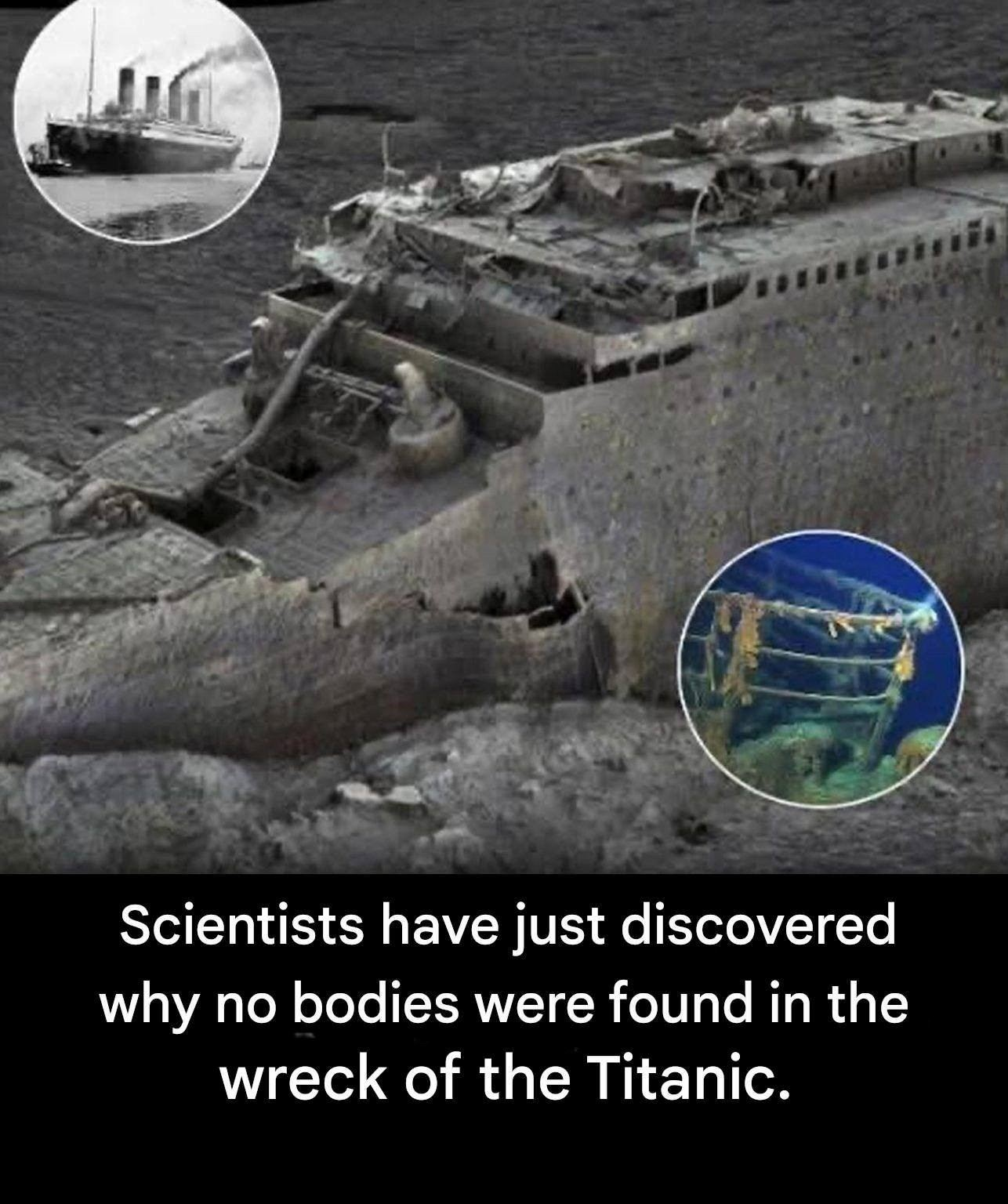
The answer lies in material durability.
Leather and fabric:
Last longer than bone in certain deep-sea conditions
Are less attractive to scavengers
Decompose more slowly
In many deep-sea shipwrecks, shoes are often found grouped together. This is because:
Bodies decomposed
Feet separated
Shoes settled to the seabed
These shoe pairs are often the only silent markers of where someone once lay.
Why Bodies Were Not Preserved by Cold Water
Cold water can preserve remains—for a time.
In shallow, cold lakes, bodies can remain intact for years. But the Titanic rests in a very different environment.
Factors that prevent preservation:
Continuous water movement
Microbial activity
Immense pressure
Chemical composition of seawater
Decades of exposure
Cold slows decay—but it does not stop it.
Time: The Greatest Factor of All
Perhaps the most important element is simply time.
The Titanic wreck lay undisturbed for:
73 years before discovery
Over 110 years as of today
Even in ideal conditions, human remains do not persist indefinitely.
Nature is relentless.
Given enough time, everything organic returns to the environment.
Respectful Exploration and Ethical Boundaries
When Ballard discovered the wreck, he made a powerful decision:
“This is a grave site. We will treat it with respect.”
Since then:
No human remains have been intentionally recovered
Exploration avoids disturbing areas likely to contain remains
The site is legally protected by international agreements
This respect is why many areas remain unexplored.
Why We Expect to Find Bodies
Culturally, we associate shipwrecks with visible tragedy—sunken submarines, aircraft wrecks, battlefield remains.
But Titanic is different because:
It occurred over a century ago
In one of the harshest environments on Earth
With a timescale long enough for nature to erase physical traces
The absence of bodies does not mean the absence of loss.
What Remains Instead
What we find instead are:
Personal belongings
Shoes
Watches
Eyeglasses
Suitcases
Jewelry
Each object represents a life interrupted.
In many ways, these artifacts speak louder than bodies ever could.
A Silent Memorial Beneath the Sea
The Titanic wreck is not empty.
It is filled with echoes—of laughter, fear, courage, and sacrifice.
The fact that no bodies remain is not a mystery of disappearance, but a testament to:
The power of the ocean
The passage of time
The natural cycle of decay and renewal
The sea did not erase the victims.
It returned them to itself.
Final Reflection
The question “Why were no bodies found?” often comes from a place of curiosity—but also from a deeper need to understand loss.
The truth is sobering:
Bodies were once there
Time, pressure, and nature reclaimed them
What remains is memory
The Titanic’s victims are not gone because they were forgotten.
They are gone because nothing human lasts forever in the deep sea.
And perhaps that is why the Titanic continues to move us—not because of what we see, but because of what we can no longer see.
If you’d like, I can:
Rewrite this in a short viral Facebook or Reel format
Create a Part 2 focusing on recovered artifacts
Adapt it for YouTube narration
Simplify it for educational use
Add scientific diagrams explanations
Just tell me how you’d like t
read more in next page