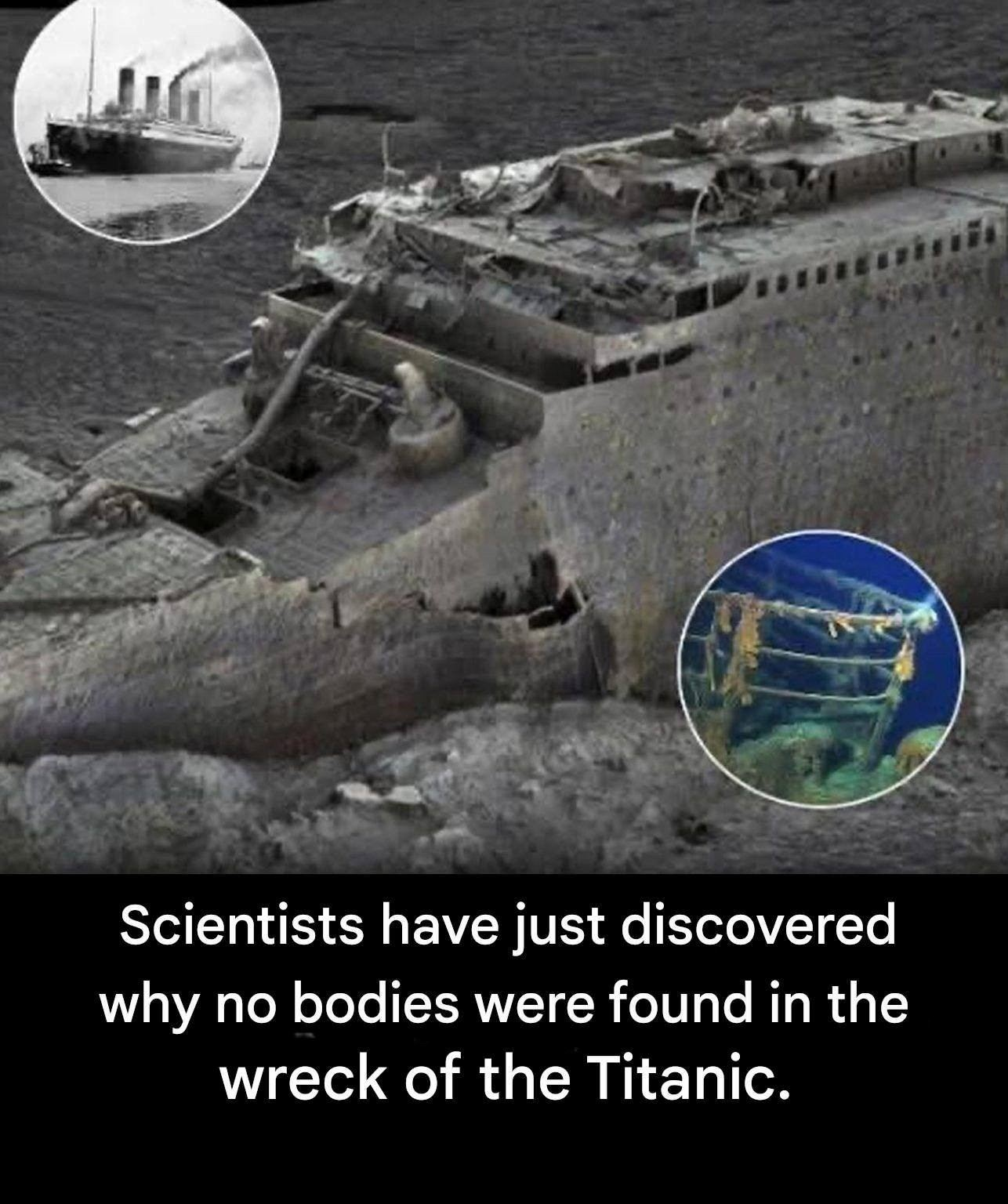
Why Were No Bodies Found in the Wreck of the Titanic?
More than a century after the Titanic sank into the icy darkness of the North Atlantic, one question continues to haunt historians, explorers, and the public alike:
Why were no human bodies found inside the wreck of the Titanic?
Given that more than 1,500 people lost their lives during the disaster, it seems almost unimaginable that when the ship was finally discovered in 1985—resting nearly 12,500 feet (3,800 meters) beneath the ocean’s surface—there were no intact human remains inside.
The answer is not simple, nor is it comforting. It lies at the intersection of biology, oceanography, time, and the immense power of the deep sea.
A Tragedy Frozen in Time
On the night of April 14, 1912, the RMS Titanic struck an iceberg during her maiden voyage from Southampton to New York. In just over two and a half hours, the “unsinkable” ship slipped beneath the surface of the Atlantic.
Out of approximately 2,224 passengers and crew, more than 1,500 perished—many trapped inside the ship, others thrown into the freezing water.
For decades, the Titanic lay undiscovered, preserved in darkness, pressure, and near-freezing temperatures. When Dr. Robert Ballard and his team finally located the wreck in 1985, the world expected haunting scenes—perhaps even preserved bodies.
What they found instead raised even deeper questions.
Bodies Were Found — Just Not Where People Expect
One crucial misconception must be addressed immediately:
Bodies were recovered after the sinking—just not from the wreck itself.
In the weeks following the disaster, ships such as the Mackay-Bennett, Minia, and Montmagny recovered over 300 bodies from the ocean’s surface. Many victims wore life jackets, which kept them afloat long enough to be found.
However:
read more in next page