Understanding and Raising Awareness About Tourette Syndrome
Tourette Syndrome is a complex neurological condition that affects millions of people worldwide. It is characterized by involuntary, repetitive movements and sounds known as tics. These tics can vary widely from person to person, ranging from mild and barely noticeable to severe and disruptive. The condition is often misunderstood, which makes awareness and education more important than ever.
Tourette Syndrome typically begins in childhood, most commonly between the ages of 5 and 10. Early symptoms often include simple motor tics such as blinking, facial grimacing, or shoulder shrugging. As time goes on, some individuals may develop vocal tics like throat clearing, sniffing, or repeating certain sounds or words. The severity of symptoms can change over time, sometimes improving during adolescence, although for some people, they continue into adulthood.
One of the most common misconceptions about Tourette Syndrome is that it always involves shouting offensive or inappropriate words. This symptom, known as coprolalia, is often exaggerated in media portrayals. In reality, only a small percentage of individuals with Tourette Syndrome experience it. Unfortunately, this stereotype contributes to stigma and misunderstanding, making life more difficult for those living with the condition.
The exact cause of Tourette Syndrome is not fully understood, but research suggests it involves a combination of genetic and environmental factors. Differences in brain structure and the way certain neurotransmitters function—especially dopamine—are believed to play a role. While it is not a psychological disorder, stress, anxiety, and excitement can influence the frequency and intensity of tics.
Living with Tourette Syndrome can be challenging, especially in social environments. Children with the condition may struggle at school due to distractions, embarrassment, or bullying. Adults may face difficulties in the workplace or in social relationships. Many individuals try to suppress their tics, which can be exhausting and may lead to increased stress or a rebound in symptoms later.
Despite these challenges, many people with Tourette Syndrome lead successful and fulfilling lives. Treatment options are available to help manage symptoms. Behavioral therapies, such as Comprehensive Behavioral Intervention for Tics (CBIT), have proven effective for many individuals. In some cases, medications may be prescribed to reduce the severity of tics. Support from family, friends, and educators also plays a crucial role in improving quality of life.
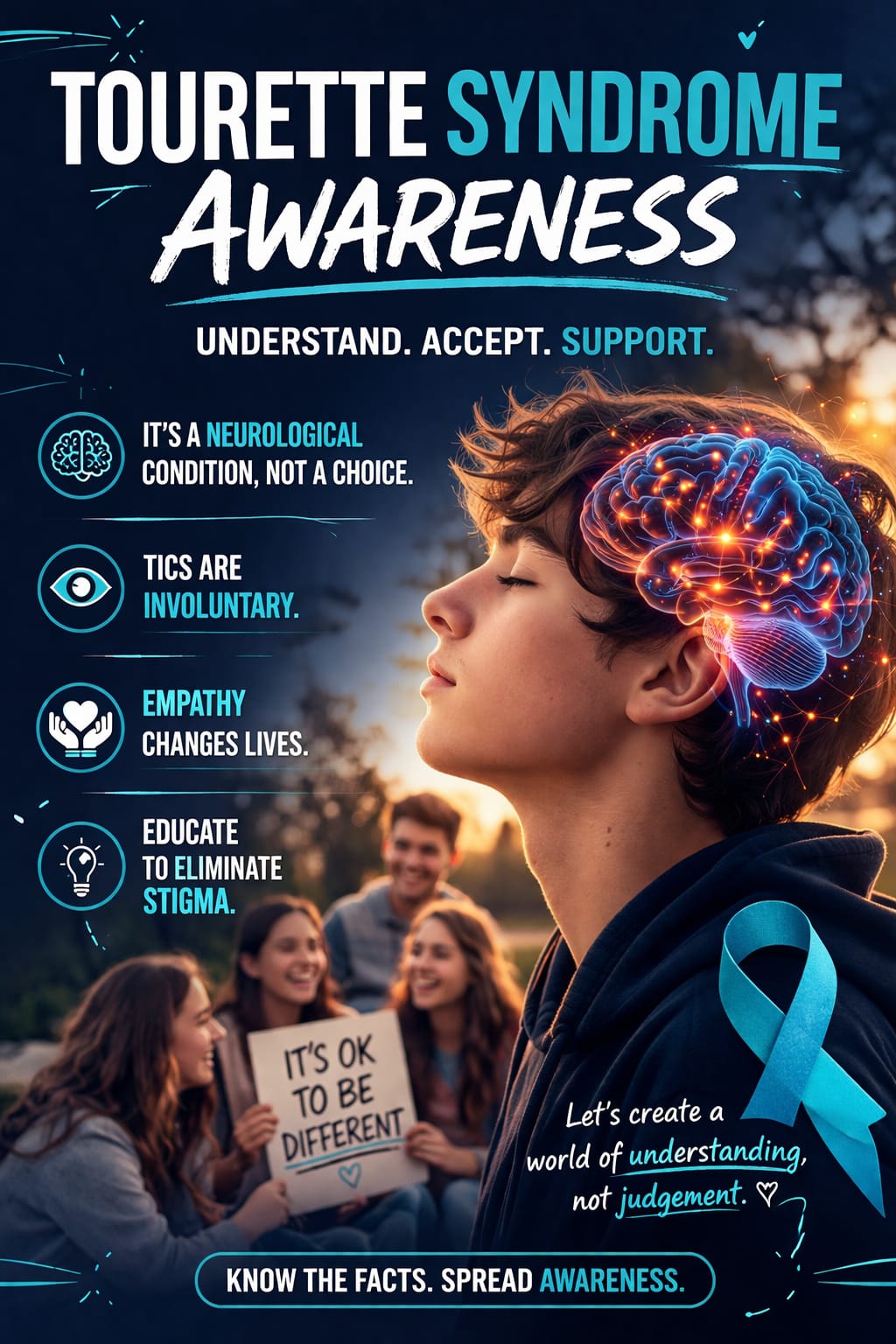
Raising awareness about Tourette Syndrome is essential to creating a more inclusive and understanding society. Education helps break down harmful stereotypes and encourages empathy. When people understand that tics are involuntary, they are less likely to judge or mock individuals who experience them. Simple acts of kindness and patience can make a significant difference.
Awareness campaigns also highlight the importance of acceptance and support. Schools and workplaces can take steps to accommodate individuals with Tourette Syndrome by fostering supportive environments and providing appropriate resources. Open conversations about neurological conditions can help normalize differences and reduce stigma.
read more in next page