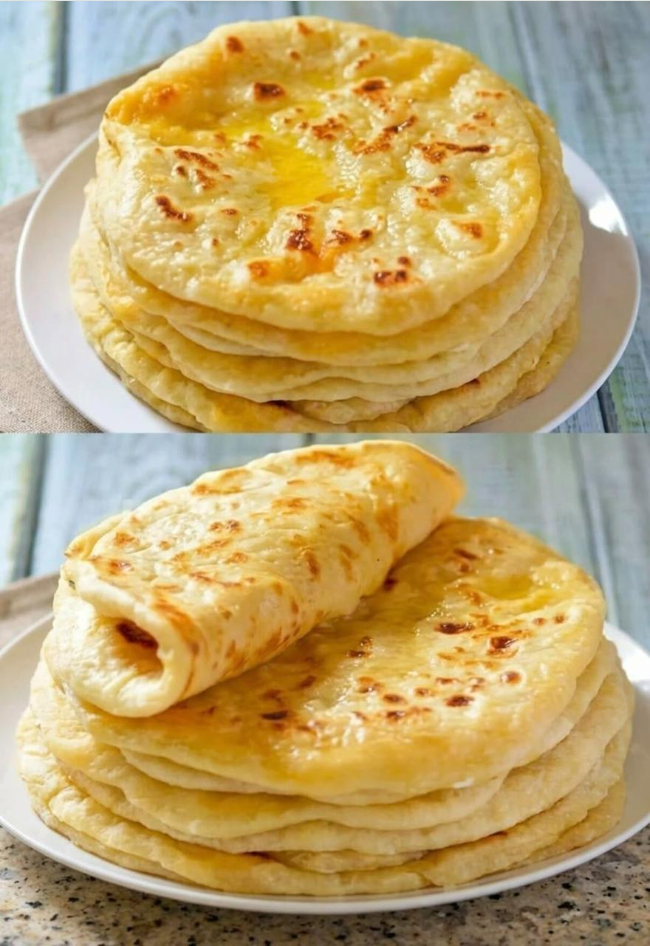
There is a category of bread that exists in almost every culture — the simple, stovetop flatbread that requires no oven, no special equipment, and no advanced technique, yet produces something so genuinely satisfying that it becomes the bread you make when you want bread now, when the oven feels like too much effort, when you want the entire kitchen to smell wonderful within the hour. Bazlama is Turkey’s version of this bread, and it may be the best version that exists anywhere. Known in rural Turkish communities as “village bread” and eaten at breakfast, with meals, as a vehicle for dips and spreads, and fresh from the skillet as a snack on its own, bazlama is a leavened flatbread that occupies a category somewhere between naan and pita but is, in the opinion of many people who have tried all three, significantly better than either. It is thick, pillowy, and cloud-soft inside, with a lightly golden and subtly blistered exterior, and it delivers a gentle tang from yogurt that makes it taste more complex and interesting than any bread this simple has any right to be.
Advertisement
The use of yogurt in bazlama is not incidental — it is central to what makes this flatbread so good. The acidity in yogurt performs two important functions simultaneously: it relaxes the gluten network in the dough, producing a tender, yielding crumb that stays soft even after the bread has cooled, and it reacts with the yeast to create a more complex fermentation environment that contributes subtle flavor depth to the finished bread. Plain yogurt or Greek yogurt both work well, with Greek yogurt producing a slightly richer, more substantial dough due to its higher protein content. The combination of yeast for lift and yogurt for tenderness is what gives bazlama its characteristic texture — thick and fluffy but never heavy, soft all the way through but with enough structure to hold fillings or stand up to enthusiastic dipping.
Ingredients
3 cups (375 grams) all-purpose flour, plus a little extra for dusting and kneading
1 cup warm water — the right temperature is important: it should feel comfortably warm against the inside of your wrist, approximately 100 to 110 degrees Fahrenheit (38 to 43 degrees Celsius). Too hot and it will kill the yeast; too cold and the yeast will not activate properly
2 teaspoons instant or active dry yeast
1 teaspoon granulated sugar — this feeds the yeast and contributes to the golden color of the bread
Half a cup plain yogurt or Greek yogurt, at room temperature
2 tablespoons extra virgin olive oil, plus a little more for cooking
1 teaspoon fine salt
For finishing: 3 tablespoons melted butter or extra virgin olive oil, a handful of finely chopped fresh parsley, and a pinch of red chili flakes (optional). This traditional topping is brushed over the warm bread immediately after it comes off the pan and is one of the great simple pleasures of Turkish home cooking.
Step-by-Step Instructions
Step 1: Activate the Yeast
In a large mixing bowl, combine the warm water, yeast, and sugar. Stir briefly to dissolve the yeast and sugar into the water. Set the bowl aside in a warm place — near a warm oven, on top of the refrigerator, or simply in a warm corner of the kitchen — and allow the mixture to rest for 5 to 10 minutes. During this time, the yeast will activate and the mixture will become visibly foamy and bubbly, with a distinctly yeasty aroma. This foaming is confirmation that the yeast is alive and active. If the mixture does not foam after 10 minutes, the yeast may be expired or the water temperature may have been incorrect — it is better to start again with fresh yeast than to proceed with inactive yeast, as the bread will not rise properly.
Step 2: Build the Dough
read more in next page