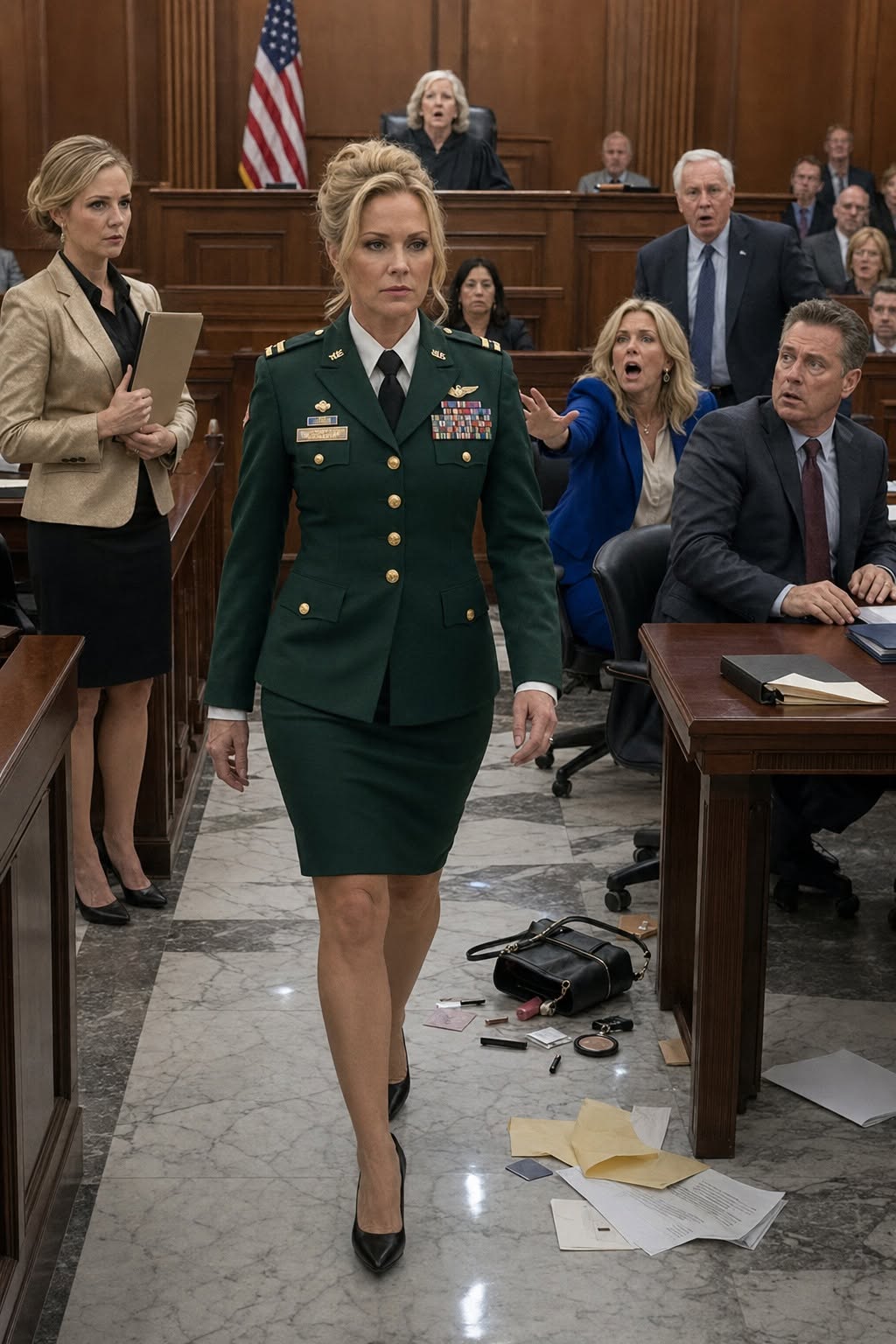
“Commander Moore, I want to direct your attention to Government Exhibit 14. Do you recognize this signature?”
A contract appeared.
Harbor Shield Recovery.
Veteran-linked ownership certification.
My copied signature sat near the bottom.
Lillian G. Moore.
I leaned toward the microphone.
“Yes.”
“Is that your signature?”
“It is a copy of my signature. I did not place it on this document.”
“Did you give Grant Moore permission to use your military service history in federal contractor filings?”
“No.”
“Did you own sixty percent of Harbor Shield Recovery?”
“No.”
“Did you receive income from Harbor Shield Recovery?”
“No.”
“Did you have any knowledge that your name, service record, and alleged hardship narrative were being used to obtain veteran-preference status?”
“No.”
Rachel turned toward the jury.
“No knowledge.”
She clicked again.
The next exhibit appeared.
A company profile.
Harbor Shield Recovery.
Founded by Grant Moore in honor of his sister, a Navy veteran who returned home after service-related hardship.
I stared at the words.
Service-related hardship.
He had even stolen the shape of my pain.
Not the real pain.
The useful one.
The version that made him look noble.
Rachel asked, “Commander Moore, did you write the hardship narrative attached to Harbor Shield’s federal application?”
“No.”
“Who did?”
“I later learned Grant wrote it.”
“Would you read the highlighted sentence aloud?”
I looked at the screen.
My stomach turned.
Then I read.
“After my sister Lillian’s difficult separation from military life, our family learned firsthand how fragile recovery can be.”
The courtroom was so quiet I could hear the fluorescent lights.
Rachel asked, “Was that statement true?”
“No.”
“What was true?”
I sat straighter.
“I was serving my country while my brother used a fake version of me to win government contracts.”
read more in next page