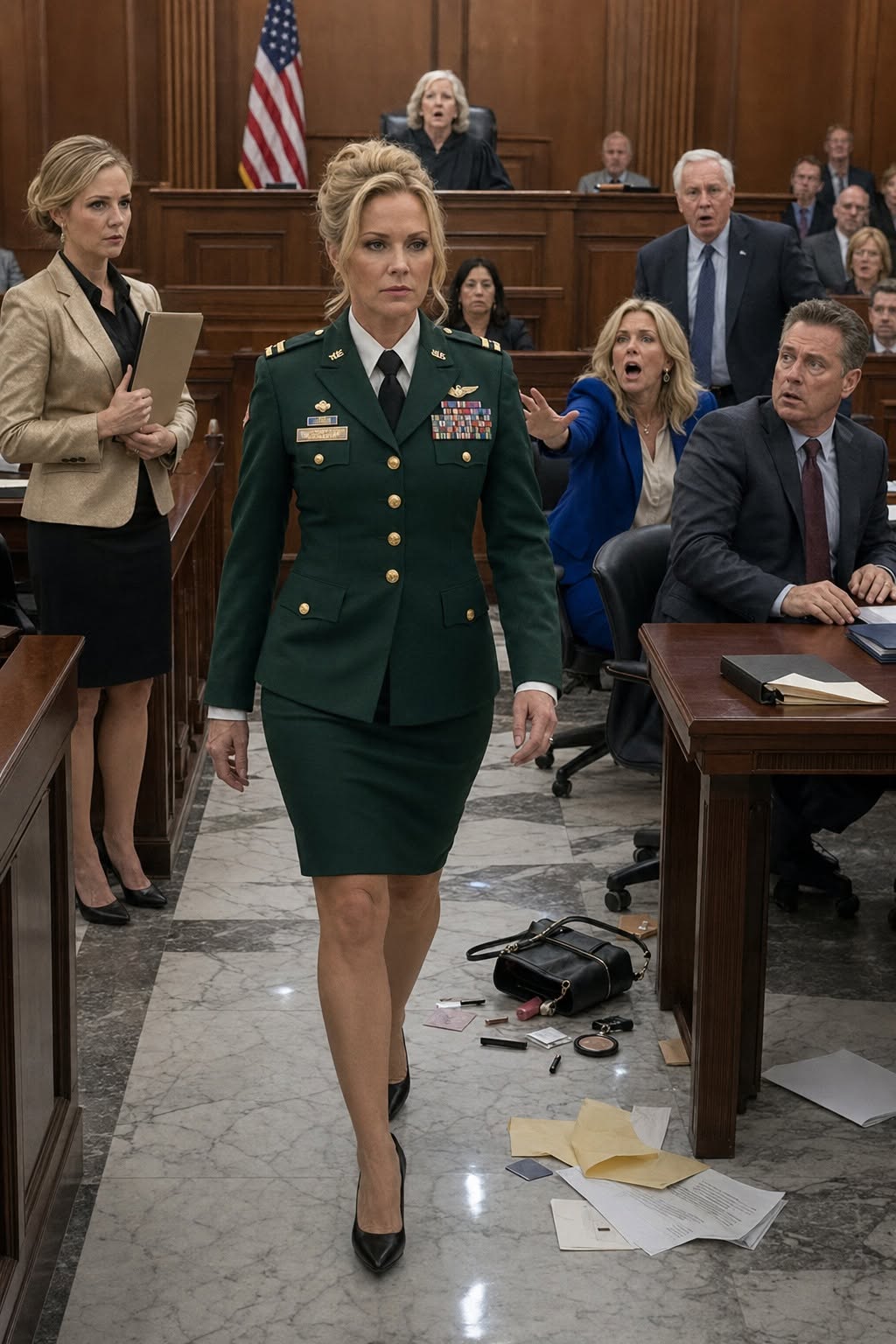
Afterward, in the hallway, my father approached me.
He looked smaller outside the courtroom.
Men like my father shrink when no chair, desk, or family structure gives them height.
“Lillian,” he said.
I stopped.
My mother stood a few feet behind me.
Rachel and an agent waited near the elevator.
I was not alone.
That mattered.
My father’s eyes were red.
“I made mistakes.”
I almost laughed.
Mistakes.
A burned dinner is a mistake.
A wrong exit is a mistake.
Eight years of choosing a lie is not a mistake.
It is a life.
I said nothing.
He cleared his throat.
“I thought I was holding this family together.”
“No,” I said. “You were holding it over me.”
His face tightened.
“I lost my son today.”
“No,” I said. “You watched your son face sentencing today.”
He flinched.
“You lost your daughter years ago. You just didn’t hold a memorial for that.”
My mother covered her mouth.
My father looked like he wanted to argue.
Then, for the first time in my life, he seemed to realize he had no authority left over the room.
Or over me.
“What can I do?” he asked.
That question should have come eight years earlier.
When I sent the first letter.
When I showed the first proof.
When I stood in his study wearing the uniform he said I had disgraced.
Now the answer was simple.
“Nothing fast.”
His eyes filled.
I continued.
“You can cooperate with restitution. You can tell the truth when people ask. You can stop saying you were tricked when you chose not to know. You can leave me alone unless I contact you.”
He swallowed.
“And after that?”
I looked at him for a long moment.
“After that is not promised.”
He nodded.
A proud man learning the shape of a boundary is not beautiful.
But it is necessary.
My mother walked me to the courthouse doors.
read more in next page