“Both,” I said.
She sighed. “I hate growth.”
“It’s annoying.”
“Can I send you the script?”
I laughed. “Yes.”
That became us for a while. Not sisters exactly. Not enemies. Two women trying to untangle themselves from a house that had taught us to compete for scraps of approval.
When my father sold the house, he asked if I wanted anything from my old room.
I almost said no.
Then I went.
The room was smaller than I remembered. The walls still had faint marks where my bookshelves had stood. In the closet, behind a loose panel, I found a box I had forgotten: old notebooks, my mother’s scarf, a birthday card she had written before she died.
My beautiful Clara, it said. You do not have to become extraordinary to deserve love. But if you become extraordinary anyway, make sure it is for yourself.
I sat on the floor and cried until my father found me.
He read the card and broke down too.
“I forgot she wrote like that,” he said.
“I didn’t.”
He sat beside me, carefully, like a man approaching sacred ground.
“I’m sorry I made you feel you had to earn what should have been free.”
I leaned my head against the wall.
“Me too.”
That was the closest we came to peace for a long time.
Peace did not erase the past. It simply stopped demanding that I live inside it.
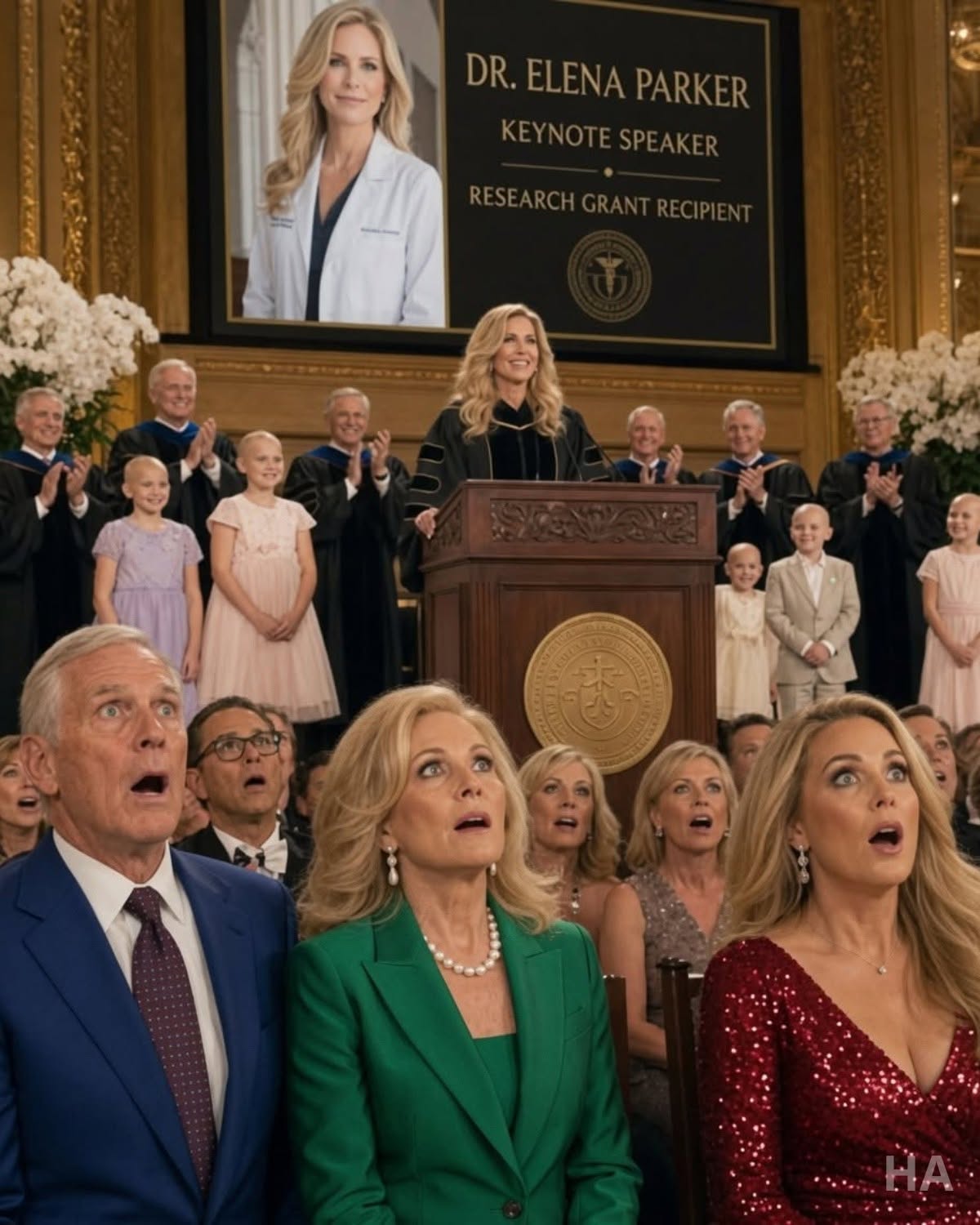
Five years after graduation, I returned to my medical school as a faculty speaker. Not student speaker. Faculty speaker. Dean Bradley had retired by then, but he attended as a guest, older and grayer, still carrying himself like a man who could summon order from chaos with one phone call.
Before the ceremony, he found me backstage.
read more in next page